Health and care experiences
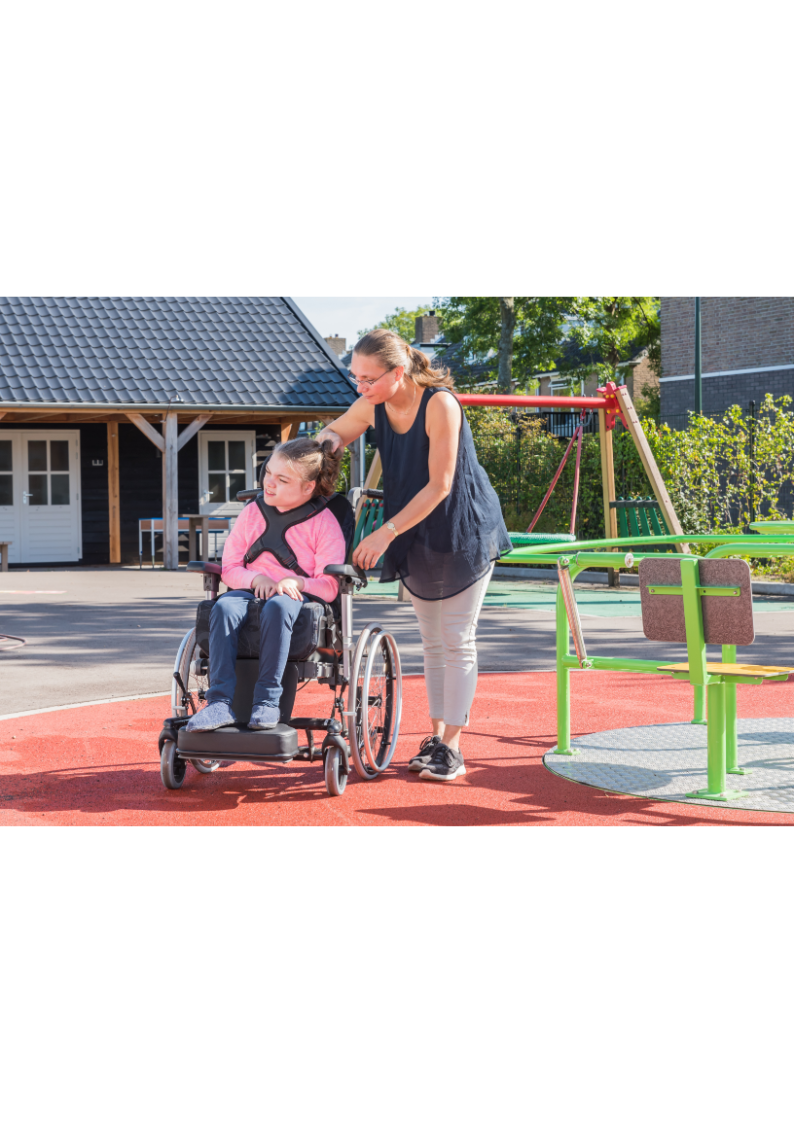
In this short film people with learning disabilities tell us about their experiences of health and health care.
News
New Coming Home Action Plan to support people with learning disabilities to live well in their communities
On 19th March 2026, the Scottish Government published the Coming Home Action Plan, which sets out measures to ensure tailored support and housing close to home, family and friends.
The action plan provides an update on progress to date, addresses the outstanding recommendations from the Coming Home Implementation Report 2022, and sets out further actions required to achieve the Coming Home vision and mission. To support the implementation of the Action Plan, a funding commitment has been made to provide bespoke support, home adaptations, equipment and technology to enable people to return to their communities rather than spending longer periods in hospital than necessary or living in supported accommodation far from home.
SLDO colleague Dr Anne MacDonald has Chaired the Coming Home Short Life Working Group, which brought together COSLA, NHS, Scottish Government, Local Government, Integration Authorities and Third Sector Partners to develop the Action Plan.
Dr MacDonald said, “I’d like to thank colleagues across the sector for all their input to developing this Action Plan, which we hope will make a real difference to the lives of people with learning disabilities and complex support needs.
“The Action Plan is focused on changes that will support people to live well in their local communities, to have choice and control about where they live, and to have their human rights upheld.”
Read more about the Action Plan at the Scottish Government website.
You can find an Easy Read Summary of the plan at this link.
There is also a training resource to support the roll out of the Action Plan with an accompanying short animation, available on the TURAS website.
SLDO Director leads new study to develop pioneering cancer detection technology
Professor Deborah Cairns, Director of the Scottish Learning Disabilities Observatory has been awarded the CRUK Early Detection and Diagnosis Primer Award, together with Professor Yang Wei at Nottingham Trent University, to develop an innovative Smart Bra that can detect breast cancer. Read about this new research.
Sydney/Glasgow collaboration looks to innovative tech to improve bowel cancer screening for people with learning disabilities
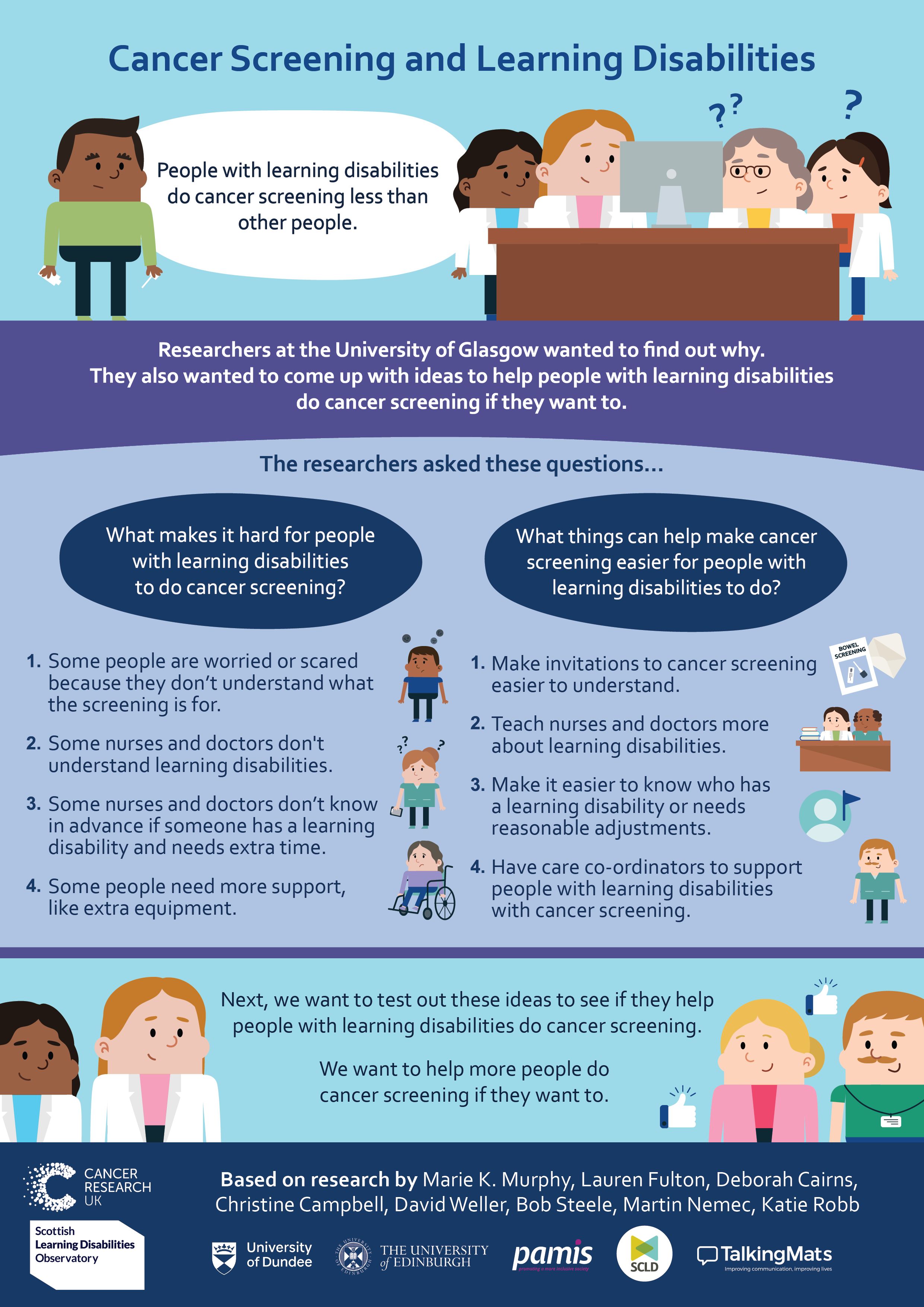
At the end of June, Dr Julie Ayre and Dr Janelle Weise from the University of Sydney visited the University of Glasgow’s School of Health and Wellbeing to meet with colleagues at the Scottish Learning Disabilities Observatory and Cancer Behaviour Research Group. Julie presented her work on generative AI and health literacy, and Janelle presented her work on breast cancer screening and people with learning disabilities. Julie and Janelle are currently collaborating with University of Glasgow colleagues Professor Katie Robb, Professor Deborah Cairns, Dr Lauren Fulton, and Research Assistant Martin Nemec on a new project, Leveraging AI to support colorectal cancer screening for people with an intellectual disability.
This project was funded by the University of Glasgow-University of Sydney Health Inequalities Initiative and aims to test the acceptability of using voice AI technology to help support people with learning disabilities through the bowel screening process. This work will lead to further collaborations between the University of Glasgow and University of Sydney. More information about all of this research will be available soon. If you'd like to know more about the research at this early stage, please get in touch via sldo-info@glasgow.ac.uk.
New resource for families & carers navigating the post-school transition period for a young person with developmental disabilities
Researchers at the Scottish Learning Disabilities Observatory and members of neuro-affirming charity DIFFERAbled have co-developed a new information resource, created to support families navigating the post-secondary school transition and beyond. It brings together guidance and information drawn from the learned experience of parents and carers of neurodivergent young people and young people with developmental disabilities, as well as a description of services that parents can access for advice and support. Find out more and access this free resource here.
Latest SLDO research
Reports & publications
We publish reports relevant to learning disabilities and autism policy and practice.
View our full list of reports and publications here.
Population profiles
Population characteristics
26,349
with learning disabilities
31,712
with autism
5,295,402
all people
Health
15.2%
with learning disabilities
37.4%
with autism
52.5%
all people
Housing and accomodation
11,886
Rented from council or housing association
8,927
Private ownership
2,203
Rented privately or living rent free
Employment and Education
12,098
Long term sick or disabled
2,460
in paid employment
1,975
students
1,934
retired
2,648
other
Family
53.3%
with learning disabilities
82.7%
with autism
78.3%
all people
Health and social care spending
2014/15
£250,188,001
Health care spending
£697,310,000
Social care spending
Other topics
Country of birth
25,599
with learning disabilities
30,689
with autism
4,926,119
all people
Language spoken at home
321
with learning disabilities
465
with autism
80,791
all people
Ethnicity
20,875
with learning disabilities
26,842
with autism
4,382,131
all people